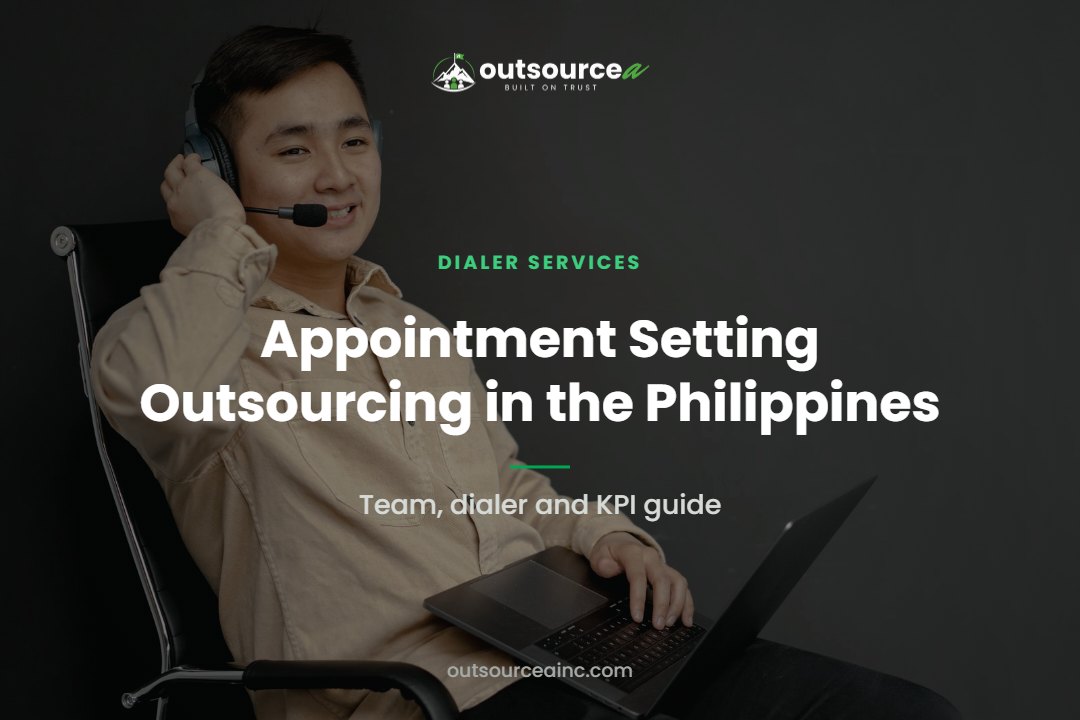
Good appointment setting needs two things working together: the right people on the phone and a system behind them that’s set up properly. Get the offer, the qualification rules and the CRM right before the first call.
Appointment setting looks simple from the outside. Call people, book meetings. In practice, it sits where people, scripts, dialers, CRM workflows and compliance all meet. When one piece is weak, the calendar fills up with meetings that don’t show or don’t fit.
Here’s how to set up an offshore appointment setting team in the Philippines that books meetings your sales team actually wants.

Start with the offer and qualification rules
Before anyone dials, your team needs to know exactly what they’re offering and who’s a good fit. Vague targets lead to booked meetings your closers don’t want.
Agree on these before launch
- Who is the ideal prospect, by role, company size or need
- What makes a lead qualified to book
- What disqualifies a lead right away
- What the meeting is for and how long it takes
- How to handle common objections
Choose the dialing approach for the campaign
Not every campaign needs the same setup. High-volume lists with simple qualification can use more automated dialing. Warm leads, high-value prospects and complex conversations usually do better with progressive or manual dialing, so agents can prepare before each call.
Our guide on predictive, progressive and manual dialers goes deeper on choosing the right mode.
Build the CRM workflow before the first call
Every call outcome should land in the right place. Decide which dispositions to use, what happens after each one, how booked meetings reach the calendar, and how reminders go out. A meeting that’s booked but never confirmed is just a future no-show.
A full calendar is only good news if the meetings are the right ones.
Track quality, not just volume
| Metric | What it tells you |
|---|---|
| Contact rate | How many dials reach a real person |
| Booking rate | How many conversations become meetings |
| Show rate | How many booked meetings actually happen |
| Qualified meeting rate | How many meetings your sales team says were a good fit |
| Pipeline from meetings | Whether booked meetings turn into real opportunities |
Dials and bookings matter, but show rate and qualified meetings tell you whether the work is paying off. If bookings go up while show rate drops, something in the process needs fixing.

Use QA to improve the system
Call reviews shouldn’t only score agents. They should show you where the script is weak, which objections keep coming up, and which lead sources produce poor fits. Bring those findings back to the campaign every week.
Stay on the right side of calling rules
Calling and messaging rules depend on where your prospects are. In the US, for example, consent and do-not-call rules apply to many campaigns. Make sure your lists, scripts and dialing approach follow the rules for your market, and check with your legal advisor if you’re unsure.
When a managed team makes sense
If you already have a sales manager who can run the campaign, a dedicated appointment setter may be all you need. If you want someone else to handle coaching, QA, reporting and day-to-day management, Fully Managed Services takes that off your plate.
Want to fill your sales calendar with the right meetings? Book a free call with us. Tell us your offer, your target buyers and your current lead sources, and we’ll help you plan an appointment setting team that fits.
Frequently asked questions
What does an appointment setter do?
An appointment setter calls or contacts prospects, checks if they’re a good fit, and books meetings for your sales team. They often also confirm meetings and send reminders.
What KPIs matter most for appointment setting?
Contact rate, booking rate, show rate, qualified meeting rate and the pipeline those meetings create. Show rate and qualified meetings are the best signs of quality.
Can a Philippine team set appointments for US businesses?
Yes. Filipino teams commonly work US hours, and many have experience in outbound sales support. Campaigns should follow the calling rules in your market.